Roof Leaks During the Winter Season
9 Sneaky Entry Points San Diego Homeowners Should Check
Why roof leaks rarely show up where they start
Roof leaks almost never drip right where the problem started. Water can travel across rafters, follow nails, ride along wiring, soak insulation, and only then show up as a stain on your ceiling or a damp patch on a wall. That’s why homeowners often say, “The leak is over here,” while the actual entry point is several feet away on the roof.
Why winter is the best time to catch problems early
Now is the perfect time to pay attention. In San Diego County, winter storms and wind-driven rain can reveal weak spots quickly, especially on roofs that have been “fine for years.” The goal isn’t to panic or assume you need a whole new roof. It’s to catch common leak sources early, before a small repair becomes a ceiling replacement, drywall repairs, insulation damage, or mold concerns.
Safety first: don’t climb on a wet roof!
Before we get into the most common entry points, a quick note about safety: avoid climbing onto your roof when it’s wet, windy, or covered in debris. If you need a closer look than you can safely get from the ground, it’s better to schedule a professional roof inspection with a licensed roofing contractor like TWM Roofing.
The 5-minute interior scan after a storm
A helpful habit after a storm is the “five-minute interior scan.” Walk through the house and look at ceilings, corners, and areas where two walls meet. You’re looking for new yellow rings, dark shadows, or bubbling paint. Pay attention around recessed lights, ceiling fans, and bathroom vent areas, because moisture in those spots can be more urgent due to electrical proximity. If you have safe attic access, you can use a flashlight to scan for damp insulation, darkened wood, rusty nails, or that telltale musty smell that suggests water has been present longer than you realized. It also helps to note the weather pattern—whether it was heavy rain, long steady rain, or wind-driven rain, because different leak sources show up under different conditions.
Quick exterior scan from the ground
Once you’ve checked the inside, do a simple exterior scan from the ground. Binoculars or a phone zoom can help. You’re looking for slipped or cracked tiles, missing ridge pieces, or shingles that look lifted or “creased.” Valleys are also worth a glance because they move a lot of water, and debris piles can block drainage. Gutters matter too; sagging sections, overflow stains, and downspouts that dump water into the wrong areas can mimic a roof leak and create water intrusion near the edges.
The 9 most common roof leak entry points in winter storms
Now let’s talk about the nine most common roof leak entry points that tend to show up during winter storms.
1) Roof-to-wall flashing
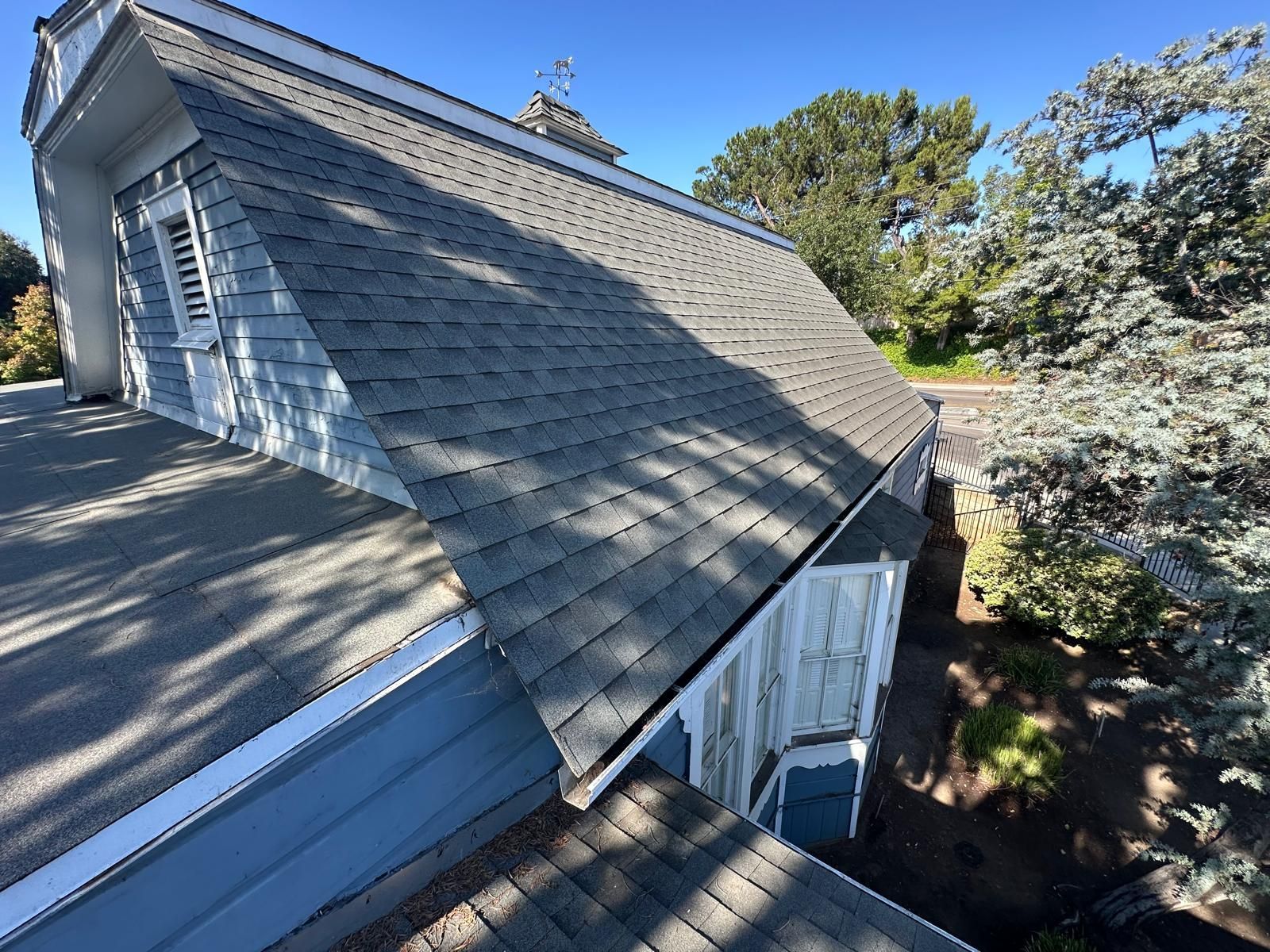
One of the biggest culprits is roof-to-wall flashing, which is the protective layering where a roof meets a vertical wall. These transitions show up around second-story walls, dormers, and certain patio cover tie-ins. Flashing needs to be installed and layered correctly, and over time it can separate, corrode, or loosen. When that happens, wind-driven rain can slip behind it and move into the structure. If you notice stains high on a wall near the ceiling line, this is often a suspect.
2) Valleys
Valleys are another common problem area. Valleys are where two roof planes meet and funnel water down a concentrated path. Because they move so much water, a small blockage becomes a big issue quickly. Leaves, needles, and debris can build up and create a dam effect, forcing water sideways under the roofing system. Leaks related to valleys often show up after long, steady rainfall rather than quick showers.
3) Plumbing vents and pipe boots
Plumbing vents and pipe boots are also frequent leak sources. The rubber components on many pipe boots can crack over time from sun exposure, and the seals around the base can fail. The result is often a slow, repeating leak that seems to come and go. If you’re noticing moisture that appears near bathrooms or laundry areas after moderate rain, pipe boots deserve a closer look.
4) Bathroom and kitchen exhaust vents
Exhaust vents. like bathroom and kitchen vents, are similar. They’re roof penetrations, and penetrations are naturally vulnerable points. If the vent hood is loose, the cover is cracked, or the sealing around it fails, water can enter around the edges. This kind of leak often shows up as staining near bathrooms and kitchens but doesn’t match a plumbing line, which makes it confusing if you’re trying to diagnose it yourself.
5) Skylights
Skylights can be beautiful, but they come with extra flashing and seals that must stay watertight. Sometimes the skylight itself is fine, but the flashing system around it has aged, or the seals are no longer holding strong after wind and debris impact. Moisture at the skylight corners, bubbling paint, or damp drywall around the opening are common warning signs, especially after storms that bring wind.
6) Chimney flashing and the cricket/drainage area behind the chimney
If your home has a chimney, chimney flashing and the drainage area behind the chimney are key suspects. Chimneys interrupt the roof plane and create complicated transitions where water can collect. Loose counterflashing, failed sealant, or poor drainage behind the chimney can lead to stubborn leaks that keep returning. Often these leaks worsen during long rain events.
7) Cracked or missing tiles, lifted shingles, or broken roofing materials
Of course, sometimes the issue is more obvious: cracked tiles, missing tiles, lifted shingles, or broken pieces. Wind can shift roofing materials even if the roof looks “mostly fine” from a distance. A single displaced tile can route water onto the underlayment in an area not designed to handle that much water. Leaks that start immediately after a windy storm, even if the rainfall itself wasn’t extreme, often fall into this category.
8) Aging underlayment (especially on tile roofs)
On tile roofs in particular, homeowners often don’t realize that the tiles are largely a water-shedding surface, while the underlayment and flashing details are what truly keep the system watertight. That’s why aging underlayment can be the hidden culprit even when the roof still looks good. If your home experiences recurring leaks that seem to “move around,” or repairs keep failing after one season, underlayment condition should be evaluated by a professional rather than continuing to chase symptoms.
9) Gutters and downspouts (drainage issues that mimic roof leaks)
Finally, don’t underestimate gutters and downspouts. Not every “roof leak” is a roof failure. When gutters overflow, water can run behind fascia boards, soak eaves, and enter at roof edges or wall intersections. This can create staining near rooflines and lead homeowners to think the roof is failing when the real issue is drainage.
What to do if you find an active leak
If you do find an active leak, focus on damage control first. Catch the dripping water with a bucket, protect flooring, and move valuables out of the area. Take photos of what you see, including the stain location and any exterior damage visible from the ground. If moisture is near electrical fixtures, turn them off and avoid using the area until it’s assessed. Then schedule a permanent repair. Temporary patches often don’t survive the next storm cycle, especially if the root cause wasn’t addressed.
Roof leak or condensation? Don’t chase the wrong problem
It’s also worth mentioning that not all moisture during winter is a roof leak. Sometimes it’s condensation. Bathroom ventilation that vents into an attic, duct condensation, or even sweating plumbing lines can drip in spots that look like a roof intrusion. A professional inspection, often paired with an attic check, can prevent money being spent on the wrong fix.
When a repair is enough (and when to call a pro)
A leak doesn’t automatically mean you need a full roof replacement. Many issues are localized and repairable if caught early. The key is a clear diagnosis so you repair the true entry point rather than repeatedly treating the interior symptoms. If you’re in San Diego County, Southern Riverside County, or South Orange County, call TWM Roofing for a roof inspection or roof repair. We proudly have been serving San Diego County since 1978 with quality roofing services, using salaried, non-commission estimators rather than pushy salespeople.
Act early in Winter
Act early, so that small roof problems are cheaper to fix before the next storm tests them again. A fast inspection now can help prevent an expensive interior repair later.
Get a Free Roofing Estimate. Call TWM Roofing today: 760-731-0777.