What California’s 2025 Energy Code Means for Roofs in 2026
California’s 2025 Energy Code is no longer something to plan for “later.” The California Energy Commission says buildings whose permit applications are submitted on or after January 1, 2026 must comply with the 2025 Energy Code, and the Commission’s January 2026 release says the update took effect on January 1, 2026 for new buildings and major renovations.
For roofing contractors like TWM Roofing, homeowners, builders, and property managers, that matters because roof decisions now connect to more than waterproofing. Depending on the project type, the roof may now affect solar capacity calculations, battery requirements, solar-ready design, cool-roof compliance, and coating installation details under Title 24.
When The 2025 Energy Code Applies
The California Energy Commission says the 2025 update increases energy efficiency requirements for new single-family homes, multifamily housing, nonresidential buildings, and also for additions and alterations to existing buildings. At the same time, the details depend heavily on the kind of project you are doing. A reroof on an existing building is not treated the same way as a newly constructed building, and a first-time tenant improvement in an unused space is not treated the same way as an alteration to a previously occupied suite.
That is why roof planning needs to start early. The same roof area that once felt like “just roofing” may now be part of a code conversation involving solar access roof area, product ratings, and how a field-applied system is installed and documented.
Why Roof Decisions Matter More Now
Under the Energy Code support materials, the roof is now part of the renewable-energy conversation for many new nonresidential buildings. The Commission says Section 140.10(a) requires solar photovoltaic systems for all newly constructed nonresidential buildings, with five exceptions, when at least 80 percent of the floor area serves listed building types such as office, retail, warehouse, hotel/motel, restaurants, schools, sports and recreation, libraries, and more.
The same CEC guidance explains that the required solar PV size is based on the smaller of either the solar-access roof-area method or Equation 140.10-A, and that the roof slope matters in that calculation: steep-slope roofs use solar access roof area multiplied by 18 watts per square foot, while low-slope roofs use 14 watts per square foot. That means roof geometry, usable area, and obstructions matter early in design and budgeting.
New Solar And Battery Rules For Many Nonresidential Projects
The roof conversation does not stop with solar. The Energy Commission says that all nonresidential buildings with solar PV systems are required to have a battery energy storage system unless they meet an exception, and the 2025 compliance materials say PV and battery requirements now apply to additional nonresidential building categories.
The same official materials note that solar-ready requirements are mandatory for newly constructed nonresidential and hotel/motel buildings that do not have a PV system because they qualify for an exception or comply through an approved community-shared solar path. In other words, even when a project does not install on-site PV, the roof may still need to be prepared for future solar.
What The Code Says About Cool Roofs And Roof Coatings
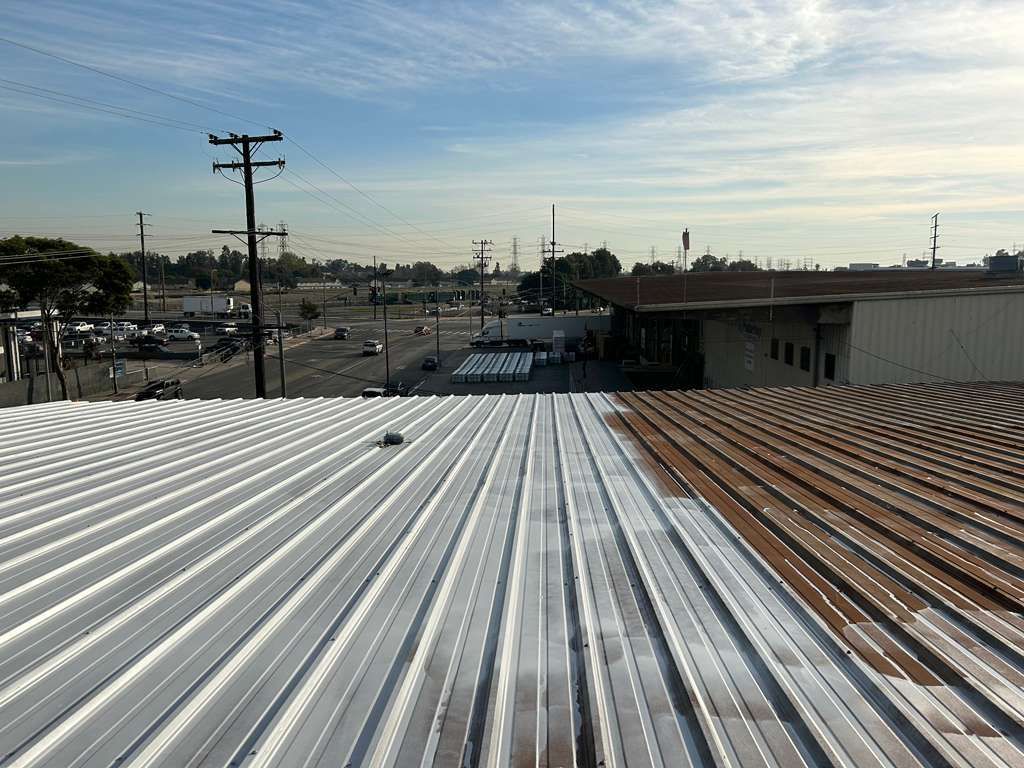
For many roofing projects, the less flashy part of the code is just as important: cool-roof compliance and coating installation. California’s 2025 compliance documents say the minimum required aged solar reflectance, thermal emittance, and optional SRI are based on the project’s climate zone and roof slope. The nonresidential building-envelope guidance also says that qualifying roofing products under the prescriptive path must meet solar-reflectance and thermal-emittance thresholds for low-slope and steep-slope applications.
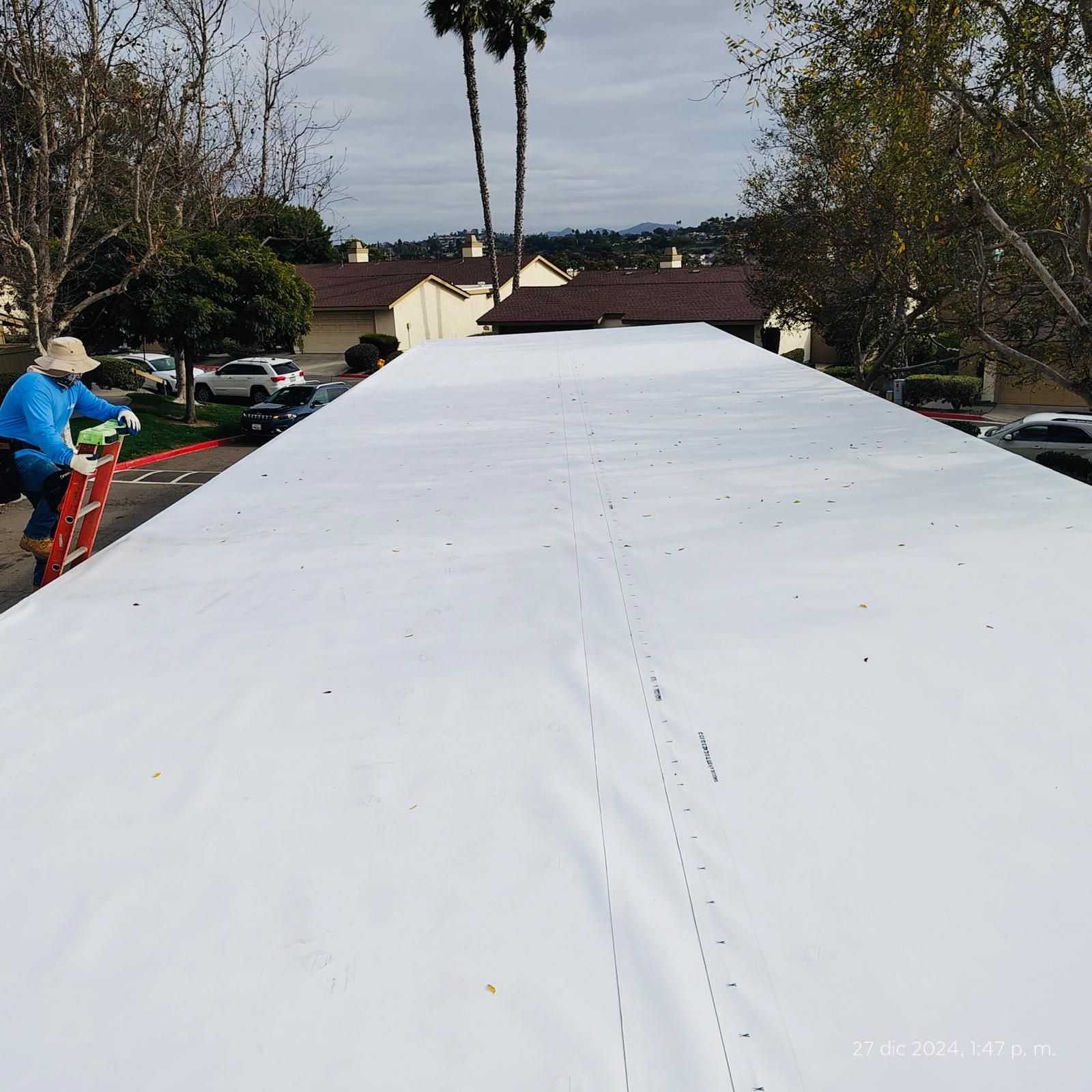
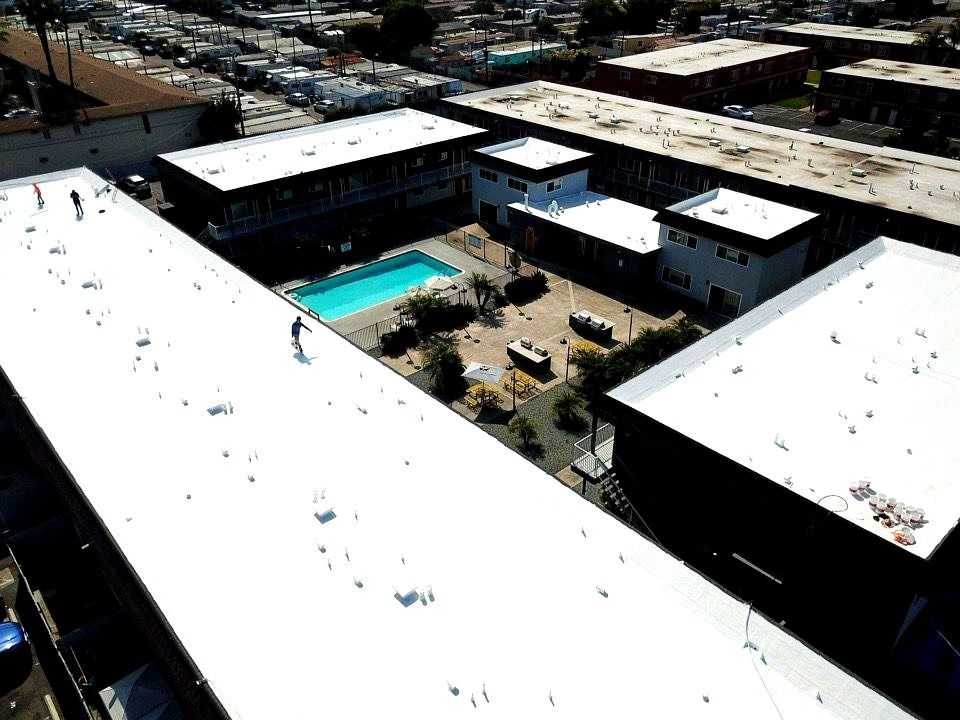
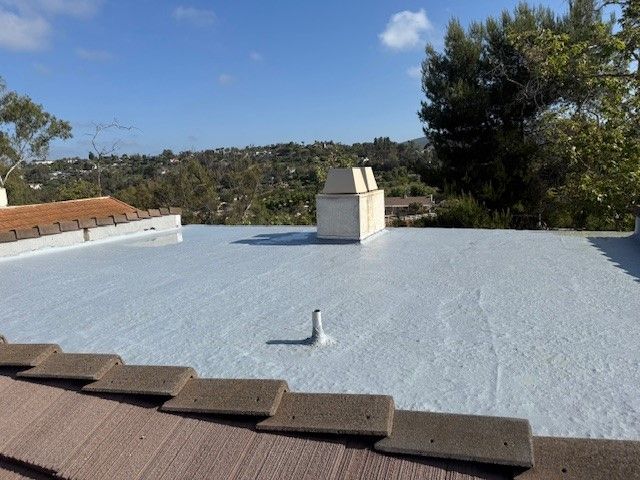
That matters even more if your project uses a field-applied coating. The CEC’s official forms and guidance state that if cool-roof requirements are being met with a liquid field-applied coating, the coating must be installed across the entire roof surface and meet the manufacturer’s recommended dry-mil thickness or coverage. The Commission’s building-envelope guidance also notes that elastomeric and acrylic-based coatings must meet performance and durability requirements appropriate to the coating material.
How Tenant Improvements And Alterations Fit In
One area that can surprise owners and developers is tenant work. The CEC says first-time tenant improvements in spaces that have never been used or occupied are treated as newly constructed buildings for purposes of the 2025 nonresidential solar and battery requirements. But alterations to an existing tenant space that was previously occupied are treated as alterations, not newly constructed buildings.
The same guidance also says additions and alterations generally do not trigger the nonresidential prescriptive solar PV and battery requirements. That distinction matters when you are scoping a roof project for a shell building, retail center, office property, or mixed-use development.
There is also one current exception worth noting. The California Energy Commission’s January 2026 release says Executive Order N-29-25 temporarily suspends the 2025 update for certain projects involving repair, restoration, demolition, or replacement of residential structures substantially damaged or destroyed by the 2025 Los Angeles-area wildfires. Those projects are not required to comply with the solar and battery storage requirements, though they must still be solar-ready.
What Owners, Builders, And Property Managers Should Do Next
The biggest mistake in 2026 is treating roofing, solar, and code compliance as separate conversations. Under California’s current rules, roof slope, roof area, occupancy type, project scope, and whether a space is newly constructed or merely altered can all change what the code expects.
That is why it makes sense to pull in a trusted roofing contractor, like TWM Roofing early. A good roofer can help flag whether the planned roof system supports the project goals, whether coating details line up with compliance requirements, and where the roof may affect solar planning, staging, penetrations, and warranty strategy. For final code determinations, owners should still confirm requirements with the design team and local building department.
Planning a reroof, restoration, or new commercial roof in 2026? Bring TWM Roofing into the conversation early so your roofing scope, energy goals, and code path work together from the start.
Get a Free Roofing Estimate. Call TWM Roofing today: 760-731-0777.